Avatar
Four generations of avatars, from simple animal sets to AI generation, balancing self-expression with privacy and trust.
- Company
- Zoom
- Role
- Lead Product Designer
- Focus
- AI · Trust & policy
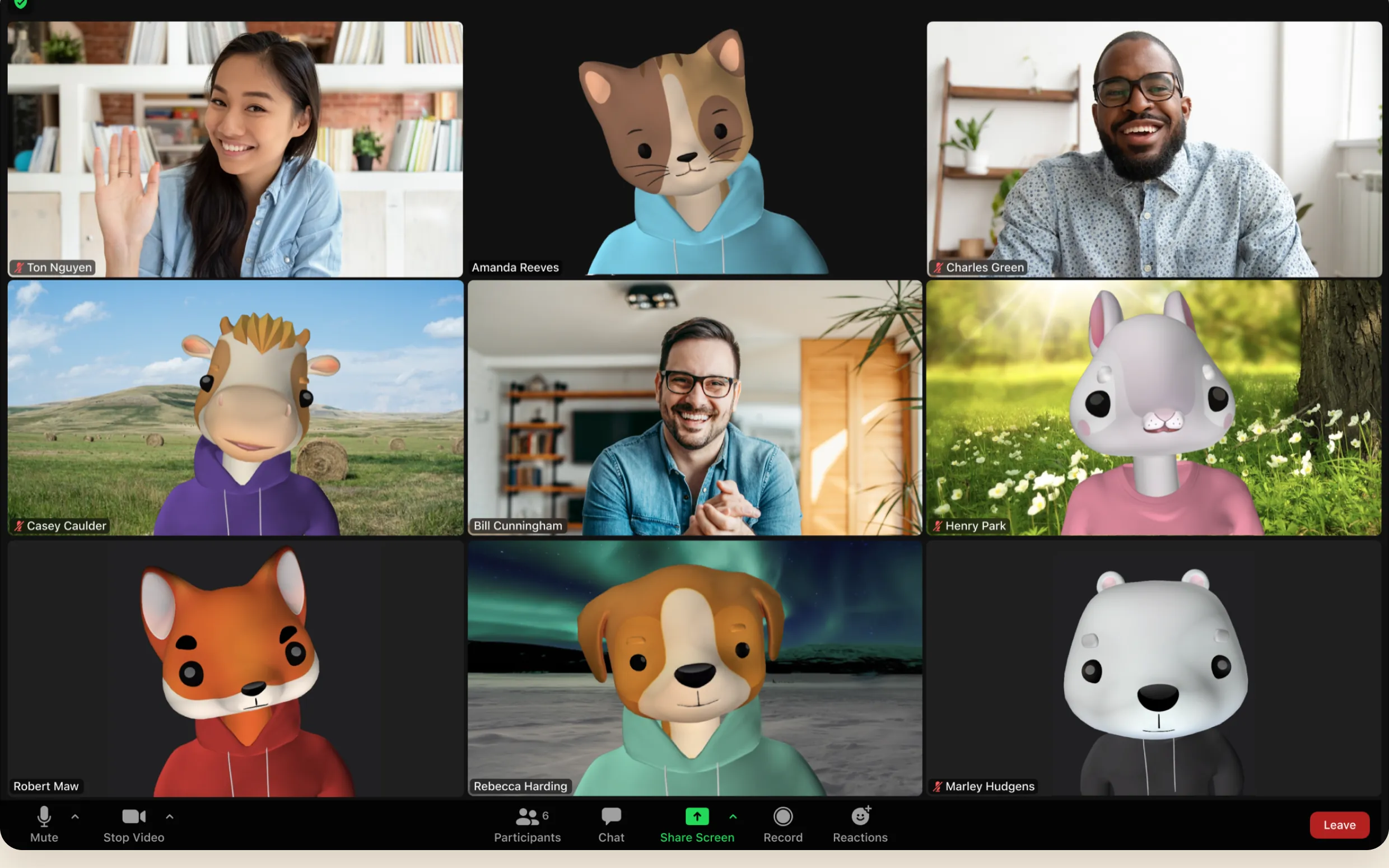
4 generations
of avatars, and the judgment to know which ones to ship, which to propose and which to stop.
The problem
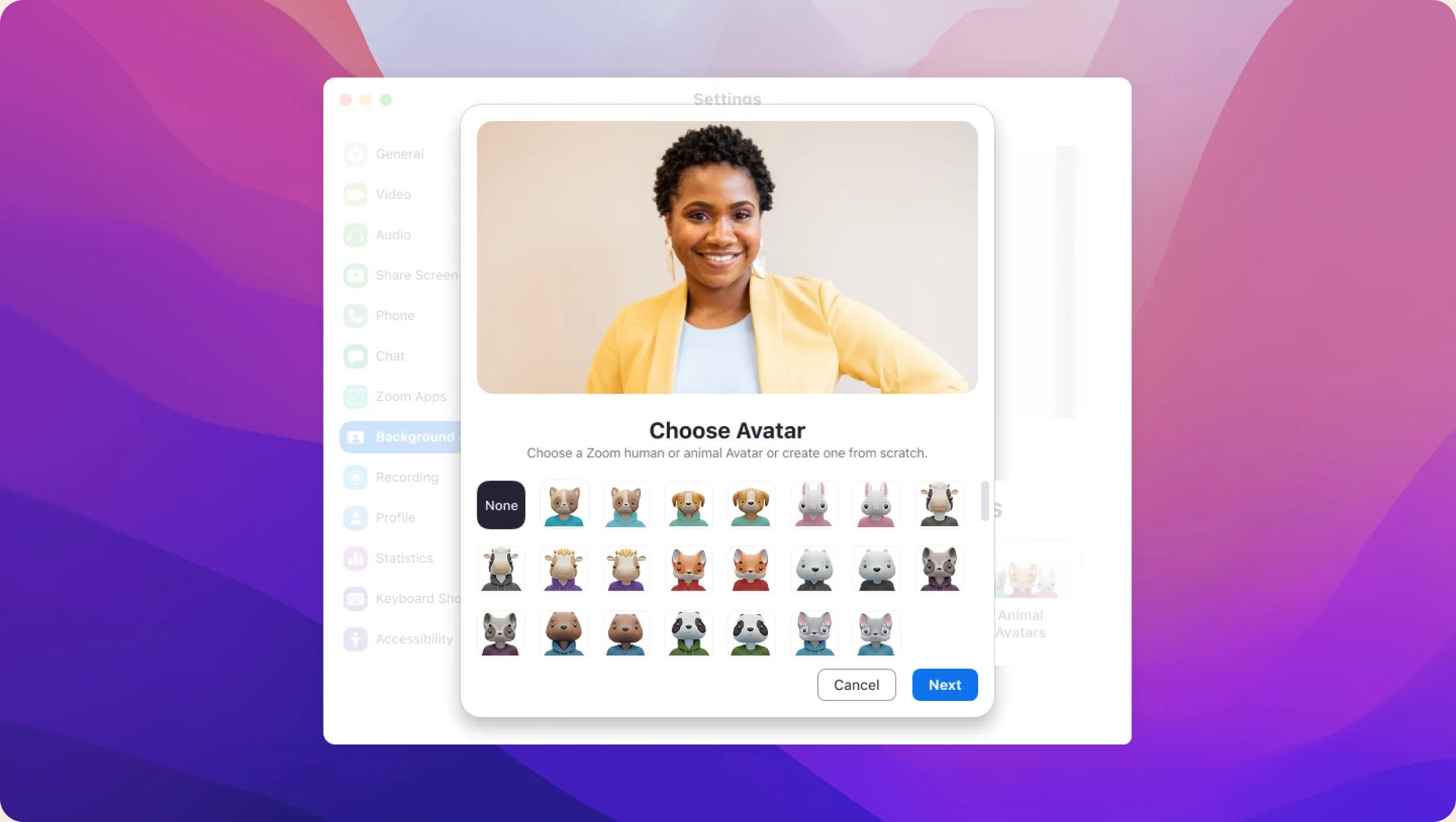
Animals weren’t enough.
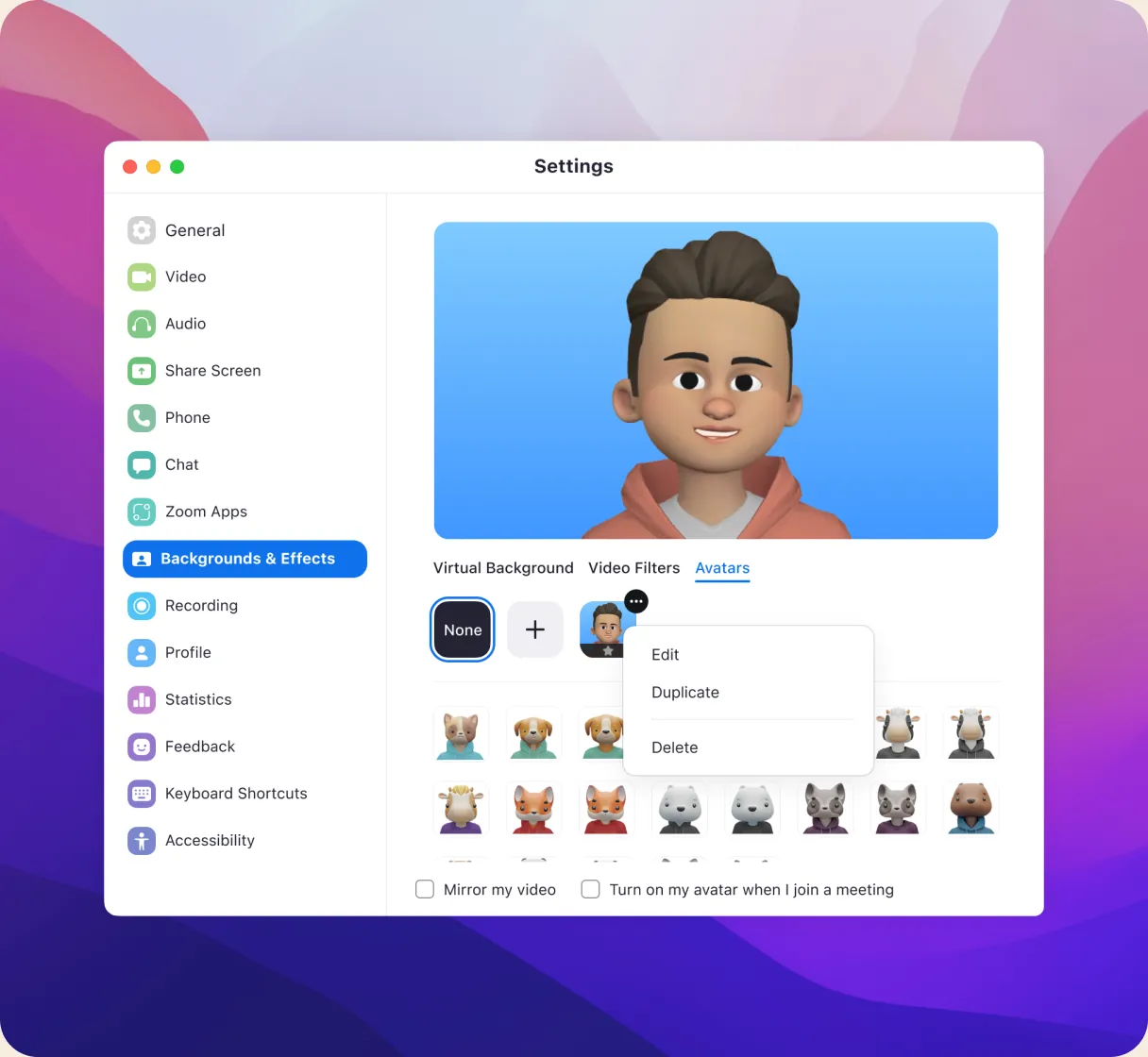
There were no human avatars, no way to create or save one, and nothing that felt right for a work meeting.
The goal
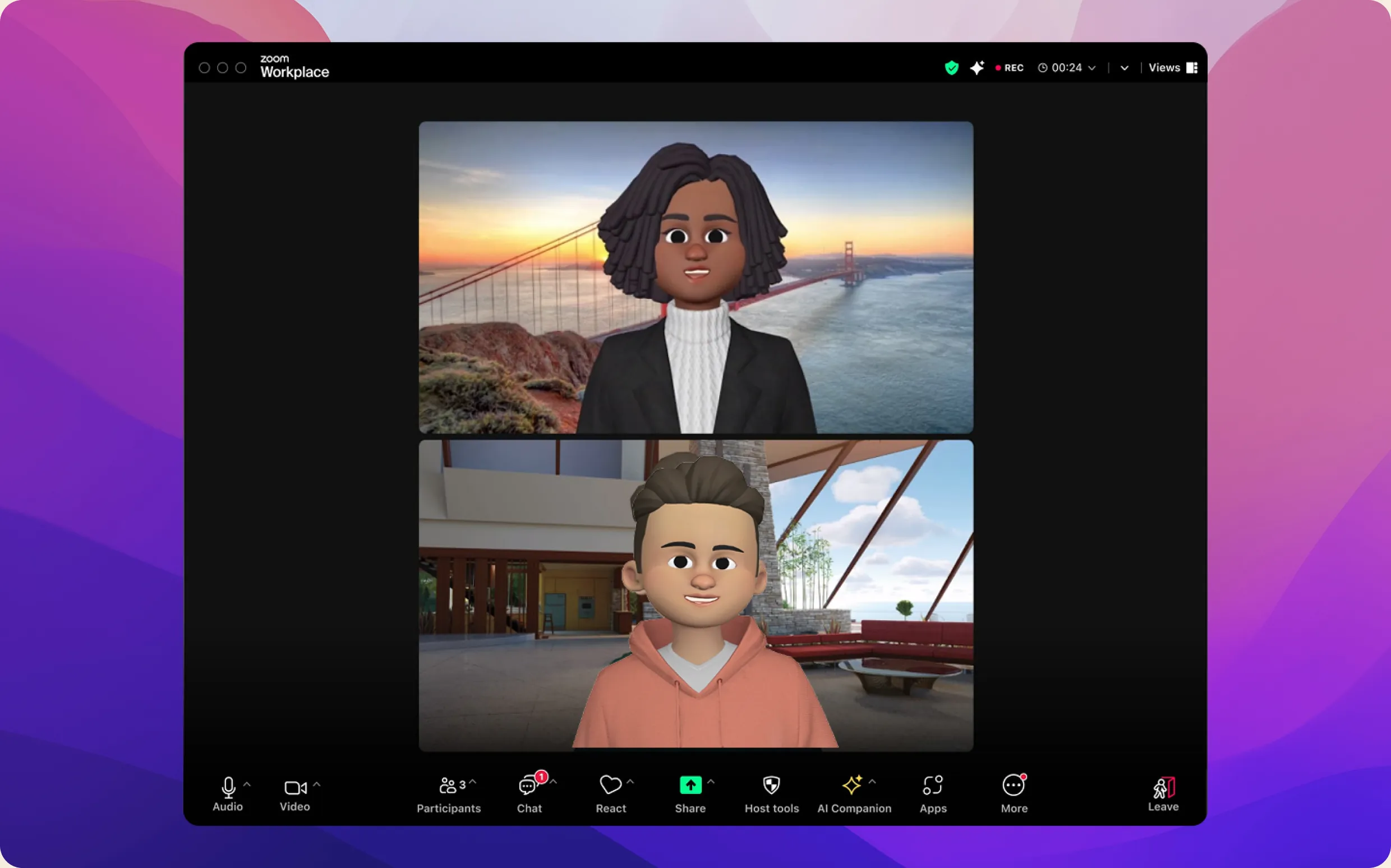
A way to show up, camera off.
- Stay engaged when video isn’t needed.
- Give presenters a livelier audience than profile initials or static images.
- Join a meeting more privately.
Representation
Inclusive, without stereotypes.
- Balanced, mid-range defaults for skin tone, body shape and gender expression
- Distinct, but never photorealistic, to avoid likeness rights issues
- Shaped with DEI and legal partners
The builder
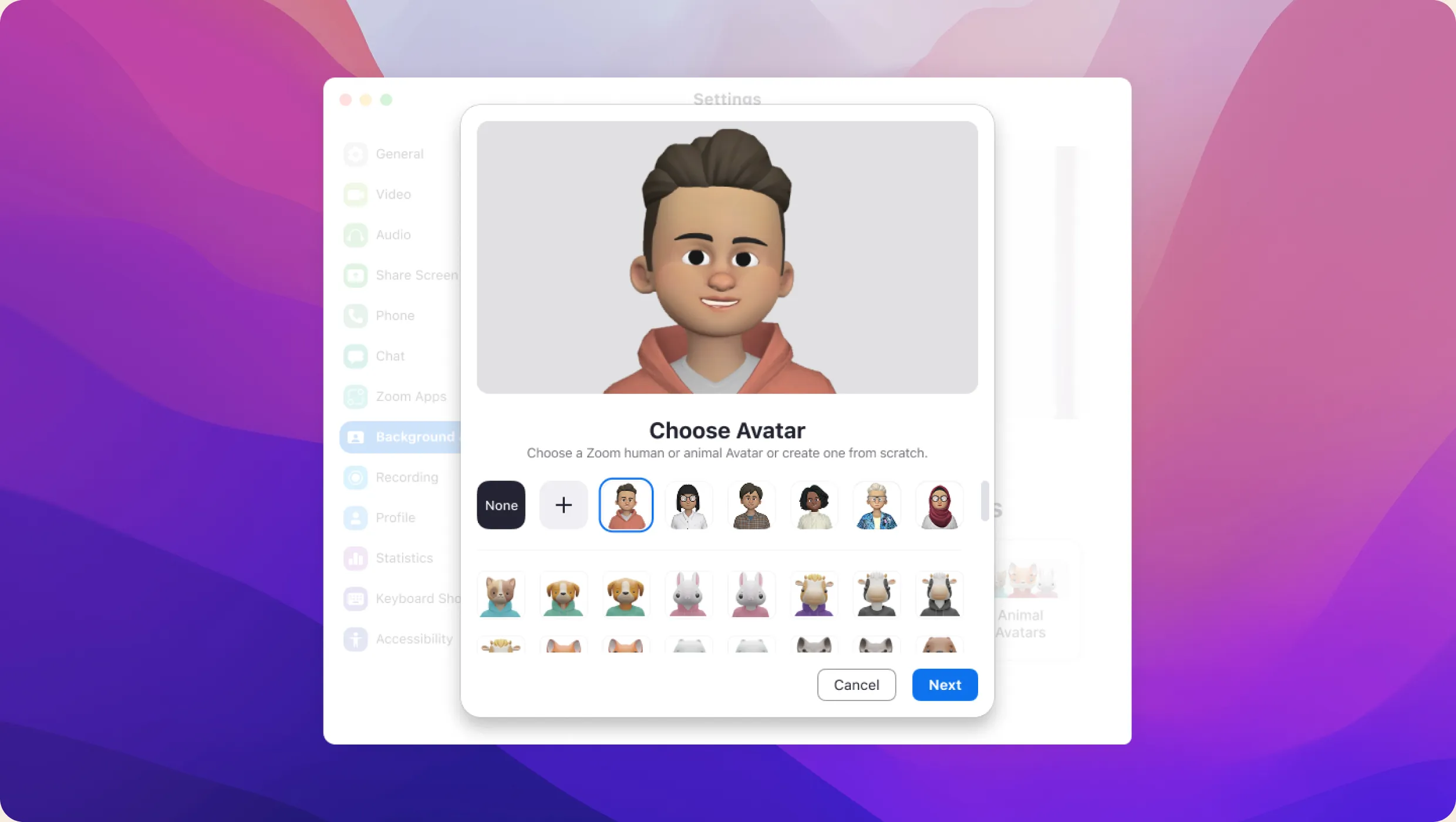
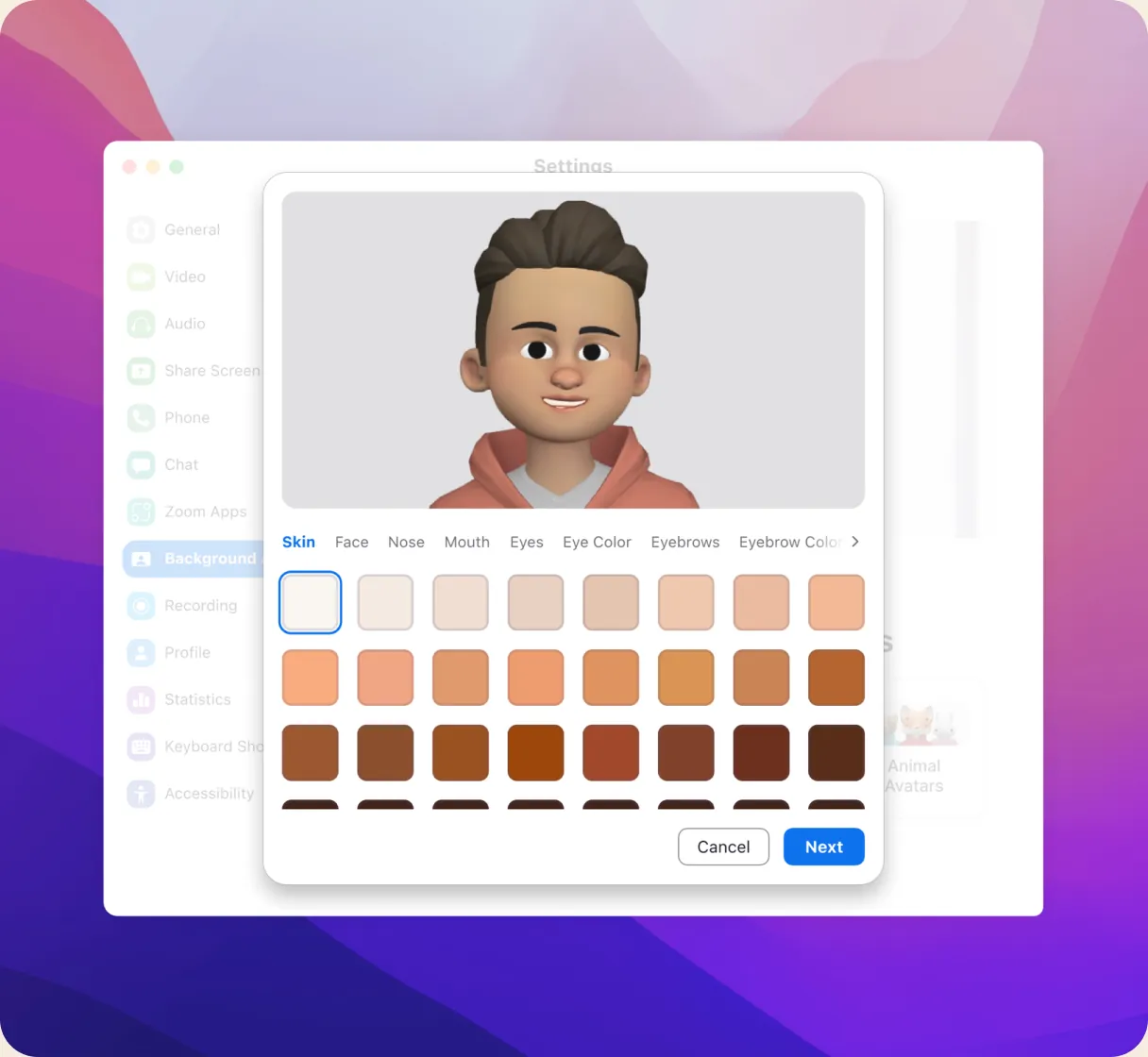
An avatar builder, from scratch.
23 characteristics, built into Zoom’s existing avatar patterns and tested with a working prototype.
What’s next
From building it to just being you.
We launched with a builder, then proposed letting AI do the heavy lifting: generate an avatar from a photo you upload, or a live snapshot, then fine-tune the details.
Shipped
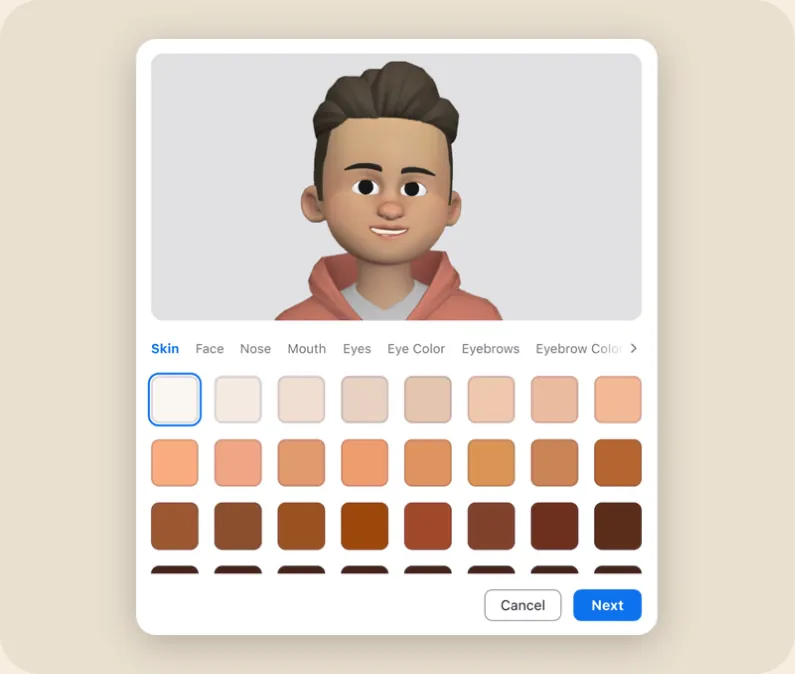
Build it
23 characteristics to mix and match, from skin tone to eyebrows.
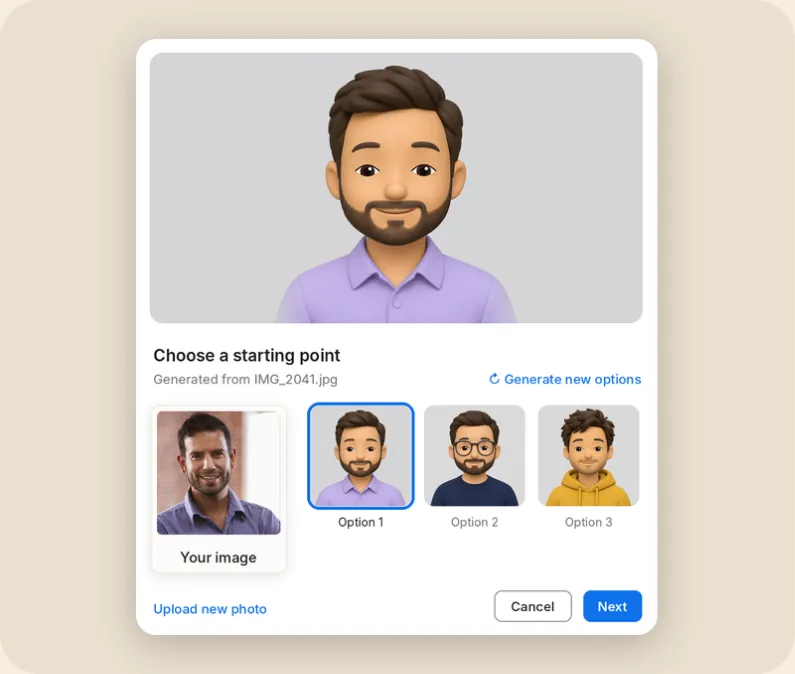
Proposed
Upload an image
Drop in any photo, pick from AI-generated options, generate more, or swap the photo.
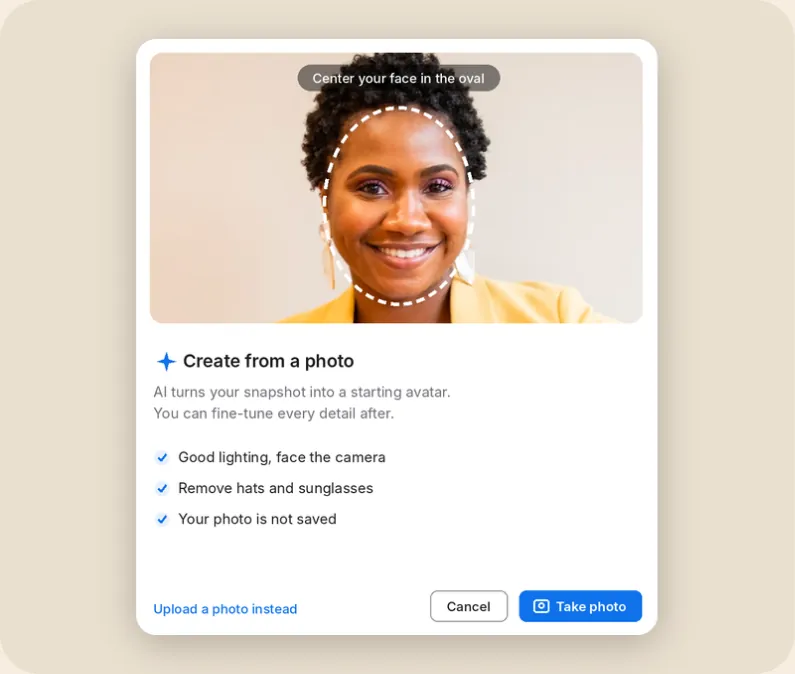
Proposed
Snap a photo
Center your face, and AI turns a snapshot into a starting avatar.
Partnership · not shipped
Knowing when to stop.
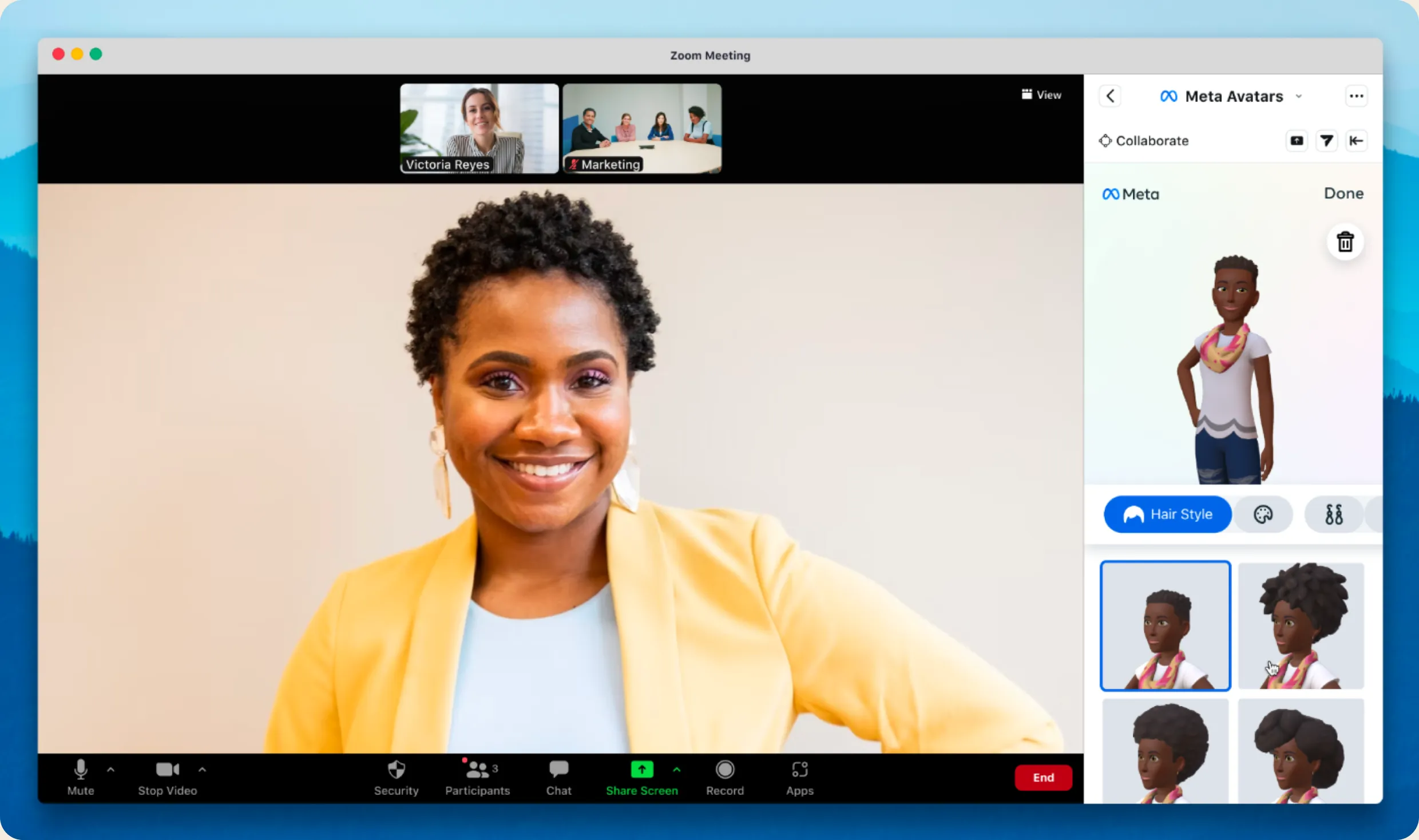
Nearly a year of iterations with Meta on placement, branding, and legal review got us to aligned designs. What we couldn’t fix was the integration itself: two permission gates buried in legalese, mid-flow. We advocated to end it, and leadership agreed.
Why it mattered

Camera off shouldn’t mean checked out.
Avatars kept people present without video, gave presenters a room of faces instead of initials, and let anyone join on their own terms.
What I took away